
Solar EPC, Delhi NCR
Rooftop solar, from survey to net meter.
Design, structure, installation and the subsidy file, by one team. The solar division sits in the same office as the testing lab, so a roof survey and a sample logbook share a project file.
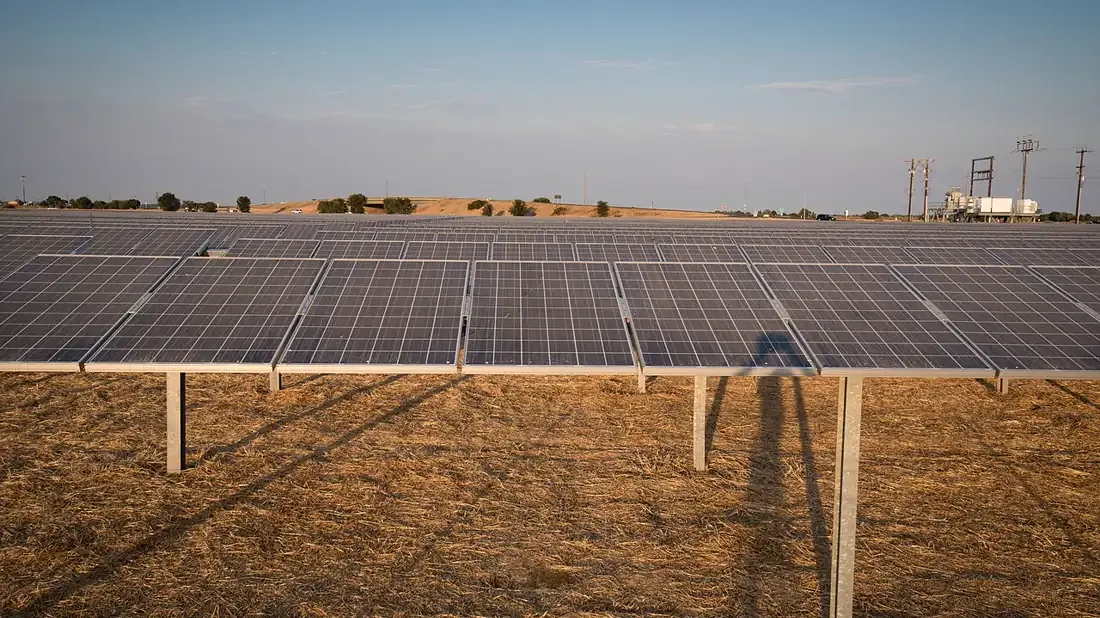
What we install.
Rooftop systems across Delhi NCR, sized to the roof and the sanctioned load.
-
Home rooftop
A grid-connected system on a house roof, with the net meter and the subsidy claim that goes with it.
-
Group housing and RWAs
Common-area plants for lifts, pumps and lighting, where the ₹18,000 per kW support applies to the society's own connection.
-
Commercial and industrial roofs
Larger arrays with a load study first, then structure, cabling and commissioning around your working hours.
-
Structure and fabrication
Raised frames, walkways and cable trays fabricated for the roof, so panels sit clear of the waterproofing.
Assessment, design, build, activate.
Four stages. You approve the design and the price before the third one begins.
-
Assessment
We measure the roof, the shadow, the sanctioned load and your last year of bills.
-
Design
Panel layout, string sizing, structure drawings and the DISCOM application forms.
-
Build
Structure, wiring, modules and inverter installed, earthed and tested on site.
-
Activate
Commissioning, net metering and the subsidy claim uploaded with your documents.
What the government pays.
PM Surya Ghar Muft Bijli Yojana is a residential scheme. It pays a fixed amount per kW after commissioning.
Swipe the table sideways to see every column.
| System size | Central subsidy, general states | Central subsidy, special-category states |
|---|---|---|
| 1 kW | ₹30,000 | ₹33,000 |
| 2 kW | ₹60,000 | ₹66,000 |
| 3 kW and above | ₹78,000 cap | ₹85,800 cap |
The third kilowatt earns ₹18,000, not ₹30,000, which is why the cap lands at ₹78,000. Special-category states are paid a higher rate per kW from the centre. Assam and Uttarakhand are in that list. A larger system does not raise the household cap.
Delhi adds a state top-up
The Delhi Solar Energy Policy pays a state capital subsidy of up to ₹26,000 per kW, capped at ₹78,000 for a household. It is linked to the project cost and the tender price, so it is not a flat payment on every roof.
Society common areas carry a proposed ₹11,000 per kWp, subject to the same cost test.
Group housing and RWAs
Common facilities get ₹18,000 per kW up to 500 kW, at up to 3 kW per house. The ceiling counts any rooftop plants the residents already installed.
Commercial and industrial premises get no household subsidy. Net metering and state policy apply instead.
State by state.
Most states publish no separate residential top-up. We check your state's current order before quoting.
Swipe the table sideways to see every column.
| State | Extra state support | Status |
|---|---|---|
| Delhi | ₹26,000 per kW, capped at ₹78,000 | In policy, tied to project cost |
| Uttar Pradesh | ₹15,000 per kW, capped at ₹30,000 | Published by UPNEDA, confirm availability |
| Haryana | None published | Central subsidy only |
| Rajasthan | None published | Central subsidy only |
| Gujarat | None published | Central subsidy only |
| Maharashtra | None published for homes | Central subsidy only |
| Madhya Pradesh | None published | Central subsidy only |
| Punjab | None published | Central subsidy only |
| Karnataka | None published | Central subsidy only |
| Tamil Nadu | None published | Central subsidy only |
| Kerala | None published | Central subsidy only |
| Telangana | None published | Central subsidy only |
| Andhra Pradesh | None published | Central subsidy only |
| West Bengal | None published | Central subsidy only |
| Bihar | None published | Central subsidy only |
| Uttarakhand | Higher central rate, no state top-up | Special-category state |
| Chhattisgarh | None published | Central subsidy only |
| Odisha | None published | Central subsidy only |
| Assam | Higher central rate, no state top-up | Special-category state |
“None published” means we found no separate residential top-up in the state's current published material as of October 2026. It does not mean a scheme cannot exist, and several states revise these orders through the year. Ask us to check your state before you sign anything.
How the money reaches you.
Six steps on the national portal, and the subsidy arrives after the meter does.
-
Register
Your state, DISCOM and consumer number on the PM Surya Ghar portal.
-
Feasibility
The DISCOM approves the capacity your roof and connection can carry.
-
Pick a vendor
An empanelled installer, and equipment that meets the scheme rules.
-
Install
Structure, modules, inverter and the meter, installed to the approved design.
-
Inspect
DISCOM inspection, grid synchronisation and net-metering formalities.
-
Claim
Commissioning documents and bank details uploaded, then the subsidy is released.
What the subsidy is not.
Four things worth knowing before you count the money.
-
It is residential
The household subsidy applies to a home connection. A shop, office or factory is not eligible for it.
-
It is capped at 3 kW
A 5 kW roof still earns ₹78,000. The rest of the system is yours to fund.
-
It follows the meter
No commissioning, no inspection, no payment. Panels on a roof are not a claim.
-
It is not free power
“Free electricity” is a slogan. The subsidy offsets part of the cost, and your bill depends on what you use.
Figures checked October 2026 against the PM Surya Ghar national portal, the Delhi Solar Portal state-subsidy page and the MSEDCL I-SMART page. State schemes change; confirm with your DISCOM before signing.
Start with the roof survey.
Bring the last year of bills and the sanctioned load. The rest is measured on site.
- Call
- +91 92116 57613
- Visit
Kaushik Enclave Block A, Burari, Delhi 110084